

Engineering Manager & Lead
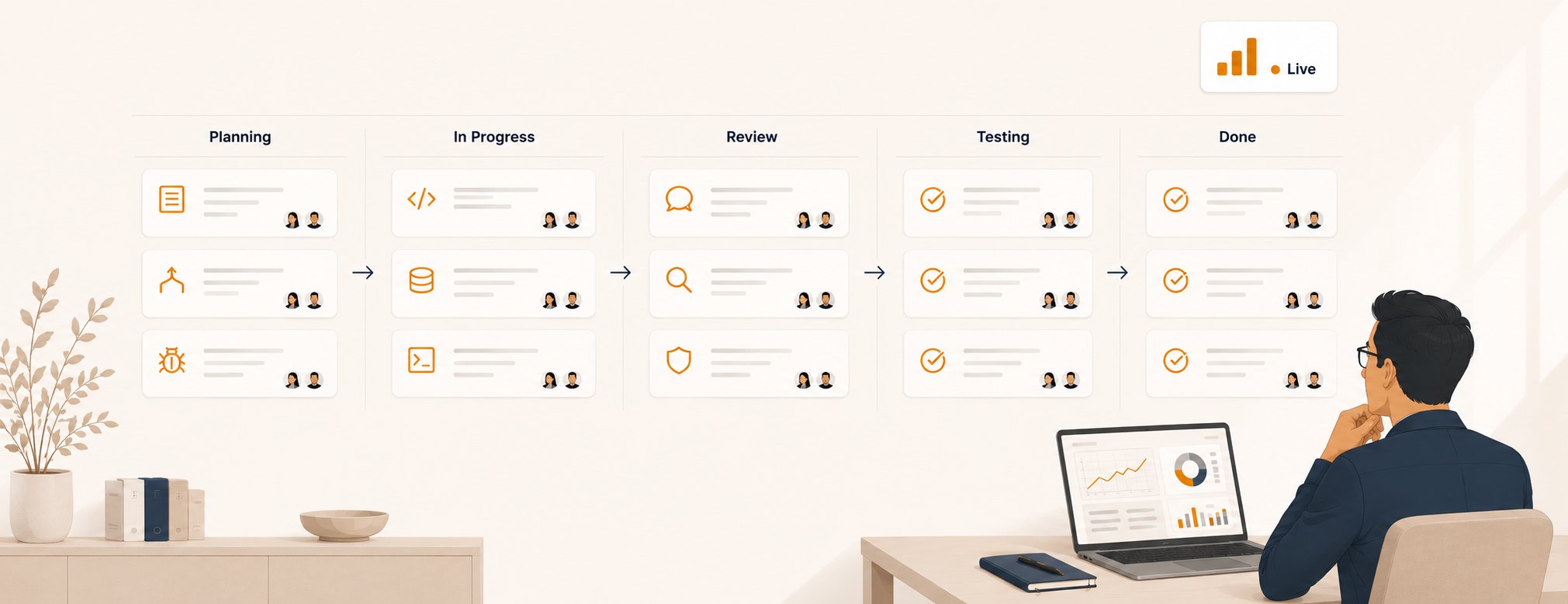
You spend more of your day routing than managing — pinging for status, chasing “is this reviewed yet,” untangling who’s blocked on whom. Somewhere in there, you became the bottleneck. And agents are widening that bottleneck, not closing it. As AI writes more of the code, teams merge far more pull requests while the time to review them climbs — one 2026 analysis found teams shipping roughly 98% more PRs but spending about 91% more time reviewing them, with human review capacity now the real constraint on delivery speed. (Codacy — AI is breaking code review) More parallel work, more to track, and you’re the integration point in the middle of it. So the job has quietly changed. It’s less about handing out tasks and more about orchestrating and reviewing a lot of parallel work without losing the thread — and doing that without becoming the gate everything waits on. It gets quieter when the status is just there. Every task sits on a live board, moving from planning to done on its own state — so you stop asking where things are and start seeing it, and you catch what’s stuck before someone escalates. The backlog stops looming, too. Instead of hand-assigning the pile, you point MyaiOne at your tracker and let it triage the whole thing — related issues grouped and turned into reviewed pull requests, each in its own isolated branch so the parallel work never collides. And you’re no longer the last line of defense. Tests and checks run on every change and agents fix the failures until they pass — so the review that reaches a human is about judgment, not noise. That’s the exact thing the review-bottleneck research is missing: most of what clogs review is the stuff that should never have reached a person. What’s left is the part of the job that actually needed you — people, priorities, and the calls only you can make — instead of being a human status dashboard.